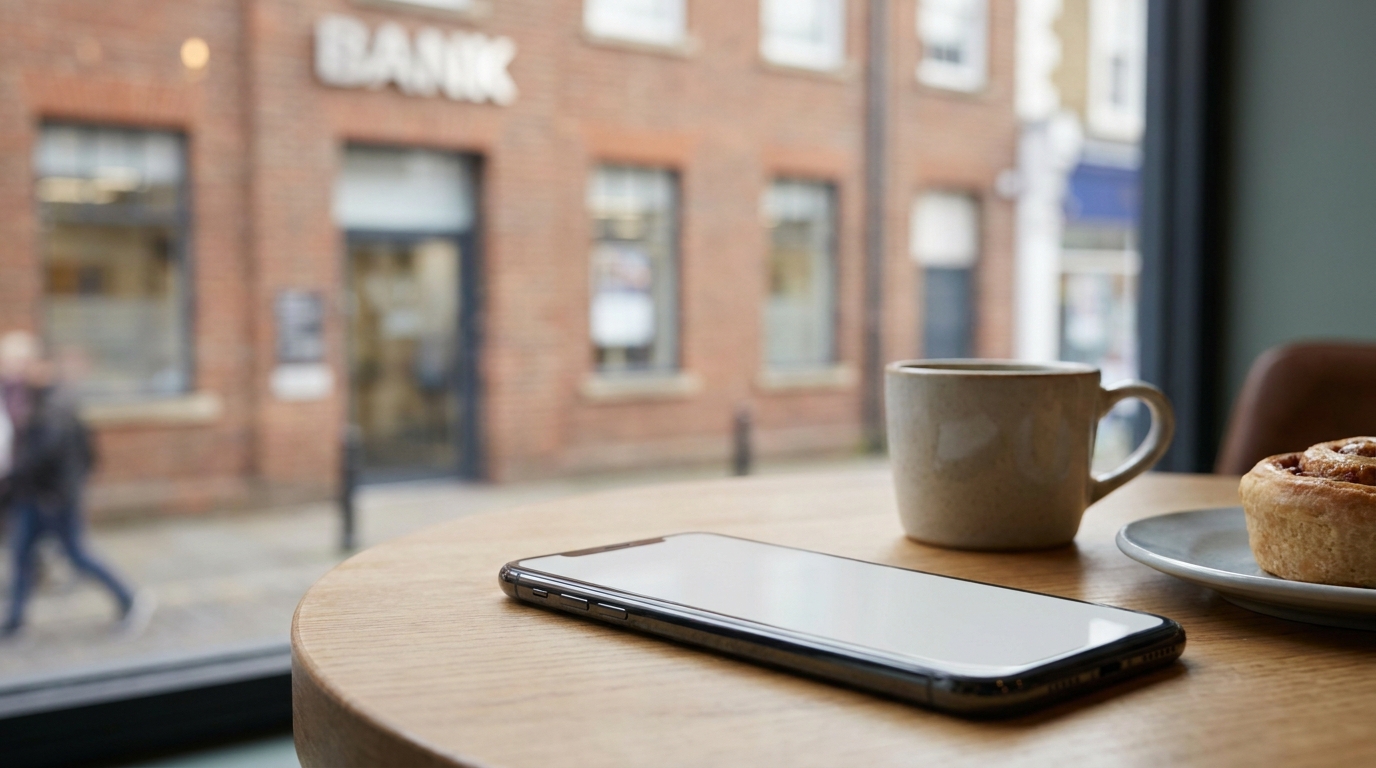
Online Banks vs Traditional Banks: Licences, Protection and Service
The word "bank" now covers very different businesses. Some have branches and century-old licences; some exist only as an app; and some apps that look exactly like banks are not banks at all. The difference that matters is not design but the licence behind the app, and therefore what happens to your money if something goes wrong.
Three kinds of institution behind the app
Most consumer-facing providers fall into one of three categories:
- Traditional banks — licensed deposit-takers with branch networks, a full product range and long operating histories.
- Digital or online banks — fully licensed banks that operate without branches. Legally they are banks in every sense: they take deposits, lend and are covered by the national deposit guarantee scheme.
- E-money institutions and payment firms — sometimes called neobanks or fintechs, these are licensed to hold and move money but not to take deposits. Some partner with a licensed bank, which holds the actual accounts; the app is the front end.
From the outside, categories two and three can be indistinguishable. Both have slick apps, instant notifications and a debit card. The difference shows up only in the terms and conditions.
Banking licence versus e-money licence
A banking licence allows an institution to take deposits and lend them out. Because it uses your money to lend, it is subject to capital requirements, liquidity rules and supervision, and its deposits are protected by schemes such as the FDIC, FSCS or an EU deposit guarantee scheme, up to the applicable limit.
An e-money licence works differently. The firm may not lend your money. Instead, it must safeguard it: keep customer funds separate from its own, either in a segregated account at a bank or invested in very safe, liquid assets, or protected by insurance. If the firm fails, safeguarded funds should be returned to customers, after the costs of an administrator are deducted, and the process can take months rather than days.
Safeguarding is a real protection, but it is not deposit insurance. Shortfalls have occurred where a firm's records were poor or funds were not properly segregated. Our explainer on deposit insurance covers what the guarantee schemes do and do not include.
In the US, the structure is often different again: many fintech apps are not banks but partner with one, and claim FDIC coverage on a "pass-through" basis. That coverage only applies if the bank failed and the records properly identify each customer's money. It does not protect you if the fintech itself fails or its ledger is wrong.
A worked example: same balance, different protection
Consider two illustrative customers, each with €15,000.
- Customer A holds it in a digital bank with a full EU banking licence. If the bank fails, the national deposit guarantee scheme repays the €15,000, typically within a few working days.
- Customer B holds it in an e-money app. If the firm fails, the €15,000 should be in a safeguarded account. An administrator takes control, reconciles customer records and returns the funds, minus permitted costs. If records are sound, Customer B gets most or all of the money back, but possibly after several months without access.
Both are regulated, both apps look the same, and in normal times both work the same. The difference only appears in failure, which is exactly when it matters.
Service trade-offs
Licensing aside, the practical differences are about service model.
Where online providers tend to be stronger:
- Cost structures without branches often allow higher savings rates and fewer account fees.
- Fast account opening, real-time notifications and good budgeting tools.
- Often lower charges for spending abroad, discussed in our guide to bank fees.
Where traditional banks tend to be stronger:
- Cash handling: paying in cash or coins, or withdrawing large sums.
- Complex needs such as mortgages, business banking or estates, where speaking to someone face to face can help.
- Human escalation when accounts are frozen for security reviews, which can happen with any provider but is often harder to resolve through an in-app chat.
Neither model is universally better. Traditional banks have also closed many branches and moved most services into apps, and some digital banks now offer telephone support. The gap is narrowing.
How to check what you are dealing with
- Look at the footer of the provider's website or app for the legal entity name and licence type.
- Search that entity on the regulator's register: the Financial Services Register in the UK, the national central bank in EU countries, or the FDIC's BankFind tool and the provider's disclosures in the US.
- Look for wording such as "authorised to accept deposits" versus "authorised as an electronic money institution".
- If the provider partners with a bank, find out which one, and whether you already hold money there, since balances at the same licence are added together.
Practical guidance
Many people use both kinds of provider: a traditional bank for the main current account, and online banks or apps for savings, travel spending or budgeting. That can work well, provided you know what protection sits behind each balance.
For anything you could not afford to lose access to for months, prefer a fully licensed bank covered by a deposit guarantee scheme. E-money apps are well suited to spending and transfers; they are less suited to holding large balances. Check licences when opening an account, keep balances per licence within the protection limit, and recheck occasionally, because firms do change licence type over time. If you are deciding where to hold a significant sum, a qualified, regulated adviser can help with your circumstances.

Viktor spent years designing and selling bank accounts before he started explaining them. He knows how rates are quoted, where fees hide and what deposit protection does and does not cover. He writes our banking coverage.
More about our writers →More in Banking
Deposit Insurance Explained: FDIC, FSCS and EU Schemes
How deposit guarantee schemes protect bank savings, what the per-person and per-licence limits mean, what is not covered, and how to check whether your bank is protected.

Checking vs Savings Accounts: How to Structure Your Money
Current and savings accounts are designed for different jobs. Here is why one pays little interest, why the other limits access, and a simple way to route money between them each month.

High-Yield Savings Accounts: How the Rates Really Work
Why some banks pay more on savings, how AER and APY are calculated, what happens when an introductory bonus ends, and the withdrawal rules that quietly decide what you earn.